How Probate Works in Colorado and Wyoming
Will or trust? In Colorado and Wyoming, the answer depends less on what you own and more on how complicated your life is. This guide walks you through probate costs, privacy, multi-state property, and blended family dynamics — in plain English.
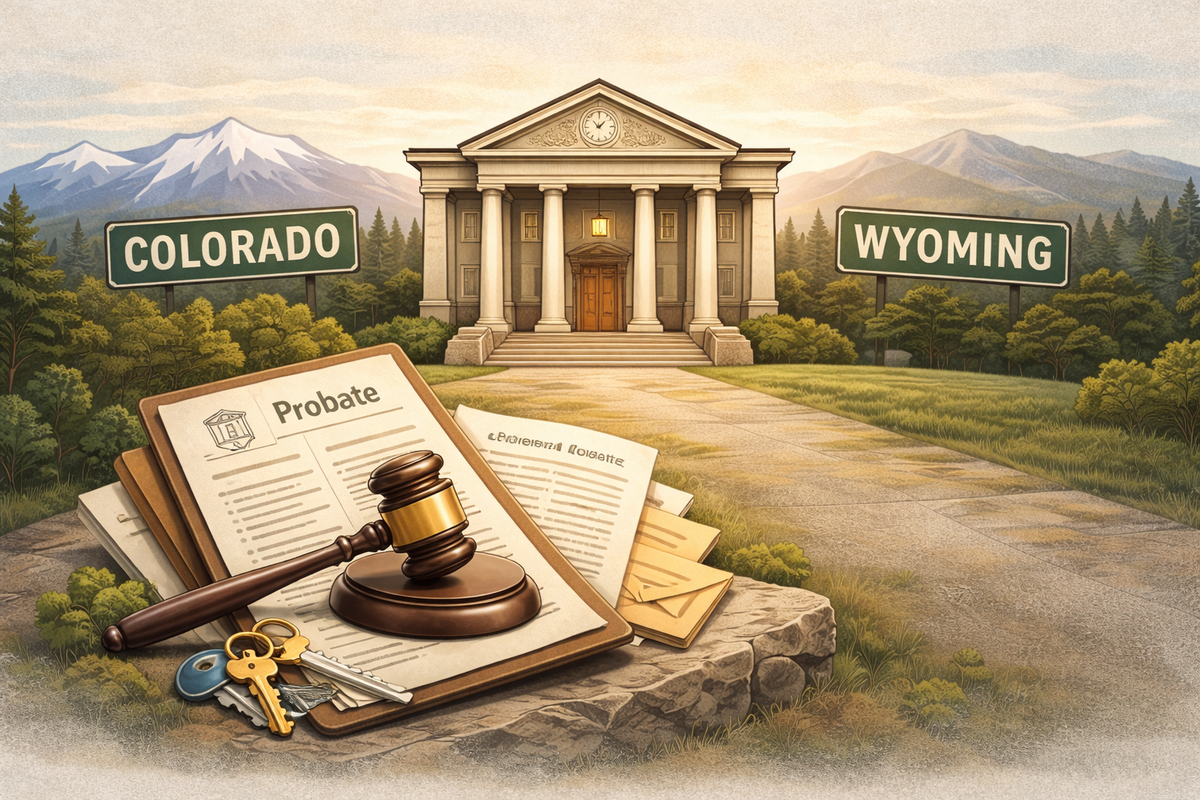
Probate is the court-supervised process that validates wills and transfers assets after death. In Colorado, the process can be informal (relatively light) or formal (involving hearings), depending on whether any objections arise. Even informal probate can take months before assets are released, and filings become part of the public record.
In Wyoming, probate tends to be slower but somewhat simpler due to smaller county systems. However, owning property in both states usually means two probate proceedings – one in each jurisdiction.
Common pain points:
1) Court filing fees and attorney costs that can reach $3,000-$10,000+ per estate
2) Delays that stretch from six months to two years
3) Public exposure of your asset list and heirs
4) Added complexity for families managing property in both Colorado and Wyoming
When a Will Alone May Be Enough
Sometimes, simplicity wins. A will may serve you well if:
-You own modest assets (bank accounts, personal possessions, one home) all titled individually
-You have no minor children or dependents
-You don't own property outside one state
-You're fine with court oversight and public filings
A will is also the right place to appoint guardians for children and specify funeral wishes. It's no less responsible; it's simply a smaller toolbox. But understand: a will only becomes effective after you pass; it does nothing during incapacity.
When a Revocable Living Trust Usually Makes Sense in CO & WY
A revocable living trust can hold title to your property during life and pass it directly to your chosen beneficiaries at death, avoiding probate. It works particularly well in Colorado and Wyoming when:
1) You own real estate in both states (for example, a Fort Collins rental and a family ranch near Cheyenne)
2) You prefer privacy and a faster transition for your family
3) You want management continuity if you’re incapacitated
Example 1: A Denver professional with a rental in Fort Collins uses a revocable trust, so her successor trustee can manage both properties smoothly if she is hospitalized, and her family never deals with court paperwork.
Example 2: A Cheyenne couple with a ranch, a cabin near Laramie, and a brokerage account wants their kids to inherit without selling anything. Their trust keeps operations running and bypasses the Wyoming probate docket entirely.
Risk Factors That Push You Toward a Trust
It's not just about asset size, it's about complexity and risk. Consider a trust if you have:
-A second marriage or blended family
-A child who struggles with spending, addiction, or disability
-Significant real estate or a business with liability exposure
-A professional career vulnerable to lawsuits
-Adult children living in different states
-Trusts create a frame for control, protecting beneficiaries (and sometimes protecting them from themselves).
How Trusts and Wills Work Together in a CO/WY Plan
In most balanced estate plans, both documents matter. A pour-over will acts as a safety net, catching any assets not titled into the trust and pouring them back in after death. Alongside:
1) Healthcare directives and powers of attorney handle decisions while you're alive.
2) The trust governs management and distributions both during life and after death.
Think of your plan as an ensemble: your will, trust, and supporting documents must play in tune.
Step-by-Step: How to Decide in Your Situation
Use this quick checklist:
___Do you own property in both Colorado and Wyoming
___Have minor or special‑needs children
___Want privacy or to avoid probate delays
___Own a business, ranch, or rental properties
___Anticipate remarriage or blended family dynamics
___Have over $250,000 in combined real and financial assets
If you check three or more, a revocable trust likely makes sense. If not, a well-drafted will may serve you fine for now.
FAQs
Q: How much does a trust cost in Colorado or Wyoming compared to a will?
A: A full trust-based plan typically costs more upfront ($4,000-$10,000), often two to three times a basic will, but it often saves money later by avoiding probate fees and delays.
Q: Can I start with a will and add a trust later?
A: Absolutely. Many families start with a will, then convert it as their assets or family situations grow more complex.
Q: Do I need a trust if I already have life insurance?
A: Life insurance pays beneficiaries directly, but doesn't manage how proceeds are used. A trust adds control, for example, spacing distributions or protecting the funds from creditors.
What to Do Next
If you're still unsure, schedule a Trust vs. Will Strategy Call with me at YourTrustedPlanner.com or the button below, and I will walk through your assets, family structure, and goals and give you a personalized roadmap you can understand in plain English.
Whether you call Fort Collins, Grand Junction, Cheyenne, or Jackson Hole home, smart estate planning isn't about having the fanciest documents; it's about ensuring your plan works when your family needs it most.
About the Author + Disclaimer
Matt Meuli, is an estate planning and asset protection attorney licensed in Colorado and Wyoming. For over two decades, I’ve helped Rocky Mountain families, ranchers, and business owners design plans that protect what they love and pass it on with minimal red tape. Through YourTrustedPlanner.com, the mission is to translate complex law into plain English — combining solid legal structure with human understanding.
When I’m not fine‑tuning estate plans, I’m often fine‑tuning jazz arrangements on my trumpet — because, in both music and planning, harmony comes from precise structure and creativity working together.
Nothing in this article is individual tax or legal advice. Your situation is unique, and real planning decisions should always be made with your own advisors