How to Design Trust Distribution Rules That Protect Colorado and Wyoming Beneficiaries from Themselves and Others
What Are Trust Distribution Rules? Trust distribution rules are the instructions that tell your trustee when, how, and under what conditions money can be paid out
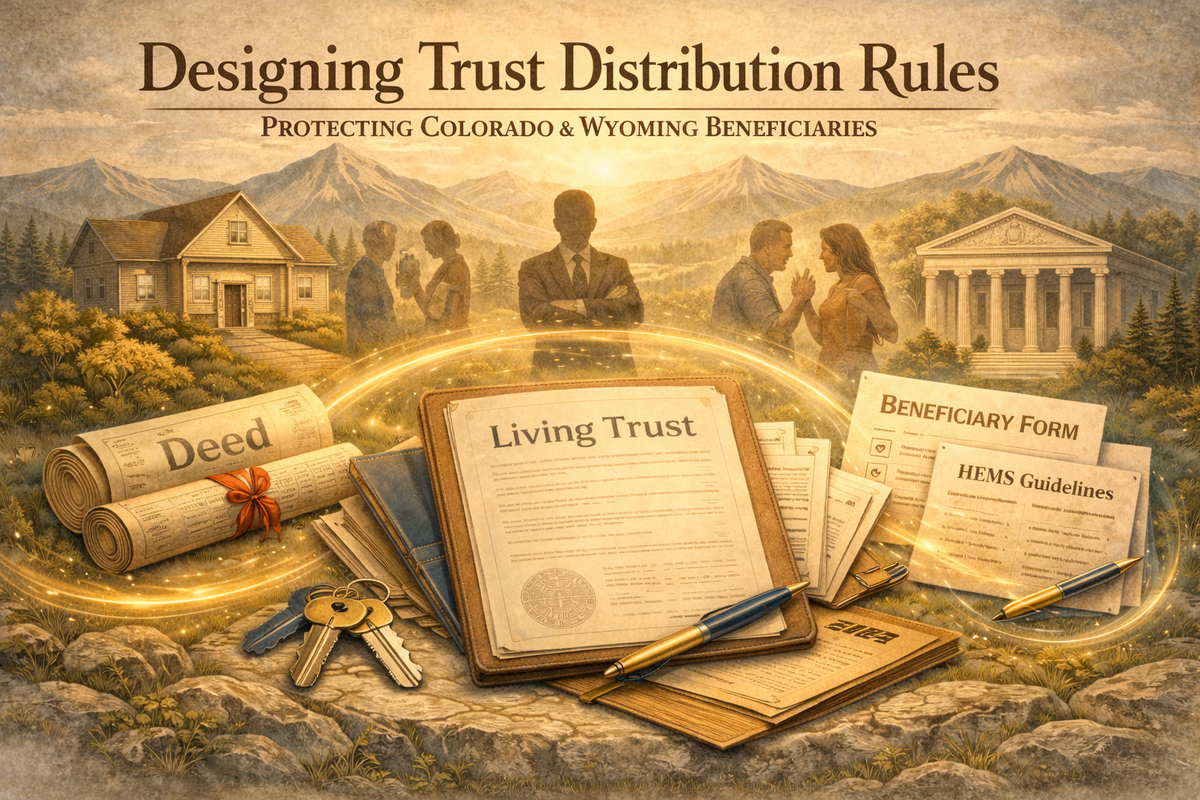
Here is the cleaned, Ghost-ready version based on your text. I removed the corrupted characters and structured it with H1, H2, H3, and normal body copy for easy paste into Ghost CMS.
What Are Trust Distribution Rules?
Trust distribution rules are the instructions that tell your trustee when, how, and under what conditions money can be paid out to your beneficiaries.
They are the sheet music your trustee reads from when life gets messy: job loss, divorce, addiction, or just plain immaturity. Well-crafted rules balance protection with flexibility, so your Colorado or Wyoming family can actually use the money without ruining the very people you are trying to help.
The Three Big Risks Distribution Rules Should Address
Every Rocky Mountain family is different, but most of the risks fall into three big buckets.
Spending Discipline
Lump-sum distributions at age 21 or 25 can disappear as fast as a Colorado spring snow. Thoughtful rules help beneficiaries grow into responsibility instead of dropping a windfall in their laps.
Predators and Ex-Spouses
Divorce, lawsuits, and creditors are common threats. Keeping assets in trust with protective language can make it much harder for outsiders to grab what you intended for your children or grandchildren.
Addiction and Mental Health Issues
When a beneficiary struggles with substances, gambling, or untreated mental health conditions, unconditional access to money can do real harm. Your trust can empower a trustee to slow down or condition distributions while still providing for essentials.
Common Distribution Models Explained
There is no single right model. Most Colorado and Wyoming plans use one of these, or a combination.
Age-Based Payouts
The trust holds everything until specific ages, for example 25, 30, and 35, and releases portions over time. This is simple and familiar, but it does not adjust if someone is clearly not ready at a given age.
Milestone-Based Payouts
Distributions are tied to life events such as graduating from college, starting a business, or buying a first home. This can encourage positive behavior, but it must be drafted carefully so your trustee is not forced to play judge on every life choice.
Fully Discretionary Distributions
The trustee has broad discretion to pay or withhold funds in the beneficiary's best interests. This offers strong protection, but it requires a trustee you deeply trust and enough guidance so that beneficiaries do not feel powerless or resentful.
Hybrid Approaches
Many of my clients choose a mix: a discretionary trust that allows the trustee to support beneficiaries under broad standards, plus optional milestones or caps to avoid overfunding irresponsible behavior.
HEMS and Standards-Based Distributions
Most modern trusts rely on a standard known as HEMS: Health, Education, Maintenance, and Support.
Health
Medical, dental, mental health care, and insurance premiums.
Education
Tuition, books, trade school, and reasonable living expenses while in school.
Maintenance and Support
Housing, basic transportation, food, clothing, and other reasonable lifestyle costs.
By tying distributions to HEMS or similar standards, you give your trustee clear guardrails. They can justify payments as supporting a beneficiary's well-being without turning the trust into an unlimited ATM.
It also helps align your trust with tax and asset protection best practices while staying flexible enough for real life.
Real-World Examples from Colorado and Wyoming Families
Young Professional With Startup Income
A Boulder-area beneficiary receives a modest salary from a risky startup. The parents' trust allows HEMS distributions plus limited career development support. The trustee can help with rent or health insurance during lean months without feeling obligated to fund luxury lifestyle choices.
Beneficiary With Inconsistent Work History
In Wyoming, a beneficiary with spotty employment and some past addiction issues is supported by a fully discretionary trust with HEMS language and a strong corporate co-trustee. The trust pays for treatment, housing, and basic needs but can decline requests that clearly fuel destructive patterns.
How to Balance Protection With Motivation
The fear of creating a trust fund baby is real. The goal is to protect your beneficiaries without removing all incentives to work, save, and grow.
Incentive Provisions
Matching earned income, helping with student loan payoff if certain academic or work milestones are met, or providing home purchase assistance after steady employment.
Caps and Pacing
Limiting annual distributions to a percentage of trust value, or allowing larger distributions only for specific, productive purposes.
Purpose Statements
Including a short, plain-language statement in the trust about your values, such as work ethic, education, and family support, so your trustee has a compass, not just a calculator.
Done well, these rules can encourage beneficiaries to see the trust as a safety net and springboard, not a replacement for personal effort.
Drafting Tips I Use in Plans
When I design distribution rules for Colorado and Wyoming clients, I tend to focus on a few key principles.
Use Clear, Everyday Language
Use clear, everyday language alongside legal terms so trustees and beneficiaries can understand the intent without a law degree.
Include Flexibility Clauses
Allow trustees or trust protectors to adjust distributions as laws, tax rules, or family circumstances change.
Separate Essentials From Extras
Differentiate between essential support under HEMS and discretionary extras, giving trustees guidance on when to be generous and when to say no.
Add Professional Support Options
Build in options for professional co-trustees or trust protectors if family dynamics become difficult or assets grow more complex over time.
Frequently Asked Questions
Can I require my kids to work to receive support?
Yes. You can include incentive-style provisions that condition certain distributions on employment, education, or other responsible behavior. The key is drafting them in a way that is practical to administer and does not box your trustee into rigid or unfair outcomes.
Can the trustee deny distributions?
If your trust grants real discretion, then yes, and sometimes they should. A well-chosen trustee with clear guidance can say no when a request would undermine the beneficiary's long-term well-being, while still providing for essential needs.
Can rules change over time?
While you generally cannot change the rules after you are gone, you can build in tools like trust protectors or decanting authority so your plan can adapt to major legal or family changes without losing your core intent.
Next Step
If you are serious about protecting your Colorado or Wyoming beneficiaries from both outside threats and their own worst impulses, distribution rules deserve as much attention as tax or probate avoidance.
I encourage you to schedule a Trust Distribution Design Session with me at YourTrustedPlanner.com. We will translate your values into concrete, workable rules so that your trust does not just move money. It supports the kind of lives you hope your loved ones will lead.
About the Author and Disclaimer
I am Matt Meuli, an estate planning and asset protection attorney serving families throughout Colorado and Wyoming. Over the years, I have seen how distribution rules can either keep a plan working for decades or cause a trust to implode in just a few years.
At YourTrustedPlanner.com, we design rules that account for real human behavior, not just textbook assumptions, while staying clear, enforceable, and practical for trustees to administer.
Nothing in this article is individual tax or legal advice. Your situation is unique, and real planning decisions should always be made with your own advisors.